
Part 1: Concept Breakdown and Introduction
The PE1200×1500 jaw crusher is a large-scale primary crushing machine from the PE series, widely used in mining, quarrying, aggregate production, construction, and recycling industries. “PE” stands for the standard jaw crusher series, known for its simple structure and reliability. The model designation “1200×1500” refers to the feed opening dimensions: 1200 mm width and 1500 mm length.
This crusher operates on the principle of compression crushing. A fixed jaw plate and a movable jaw plate form a V-shaped crushing chamber. An eccentric shaft drives the movable jaw to swing back and forth, squeezing and breaking materials against the fixed jaw. It excels at handling hard and abrasive materials like granite, limestone, iron ore, and concrete, with a maximum compressive strength up to 320 MPa.
Key specifications include:
- Maximum feed size: up to 1020-1000 mm
- Discharge opening range: 150-300/350 mm
- Motor power: 160-220 kW
- Weight: approximately 86-100 tons
Here is a photo of a typical PE1200×1500 jaw crusher in a manufacturing or operational setting:
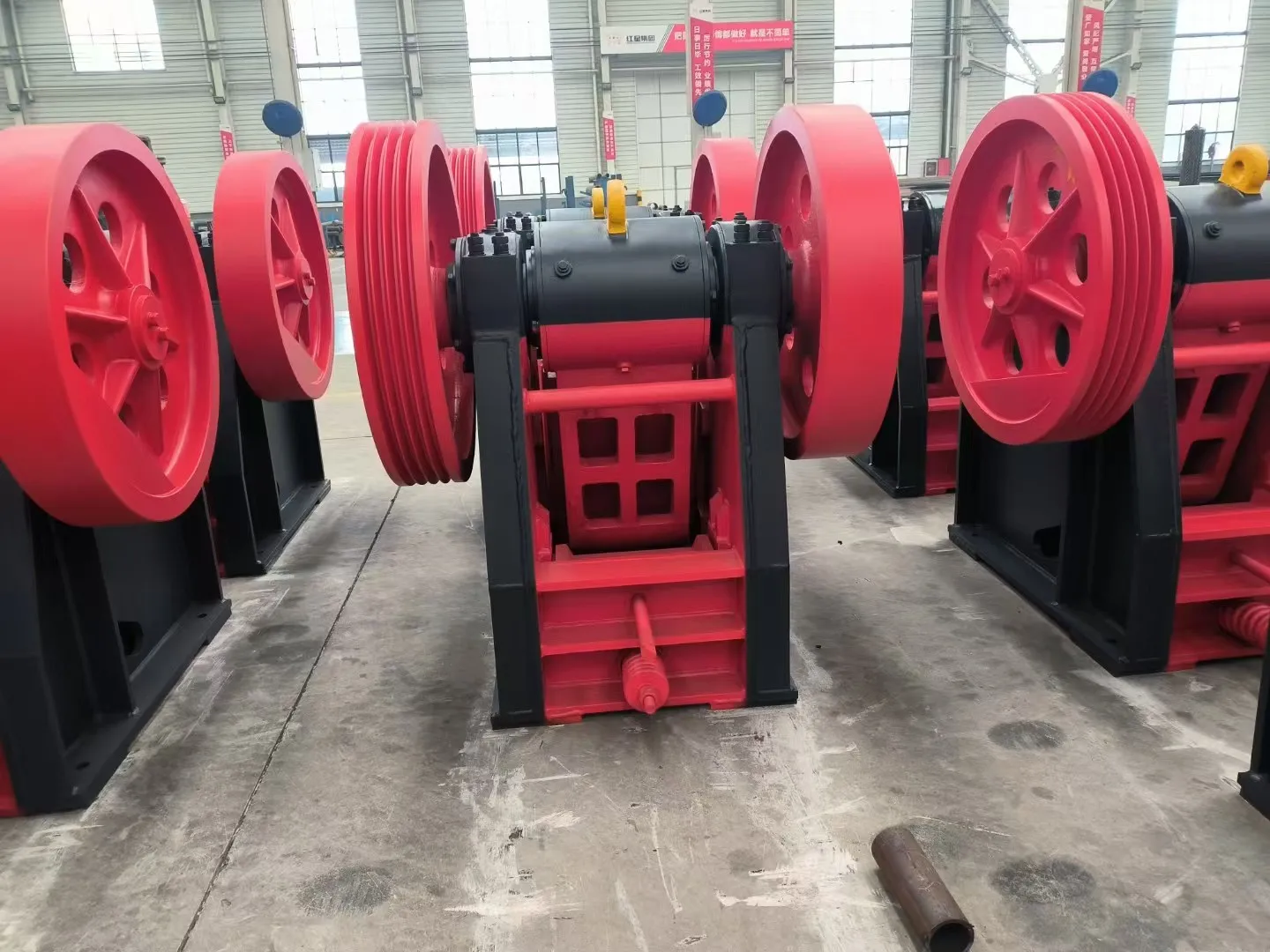
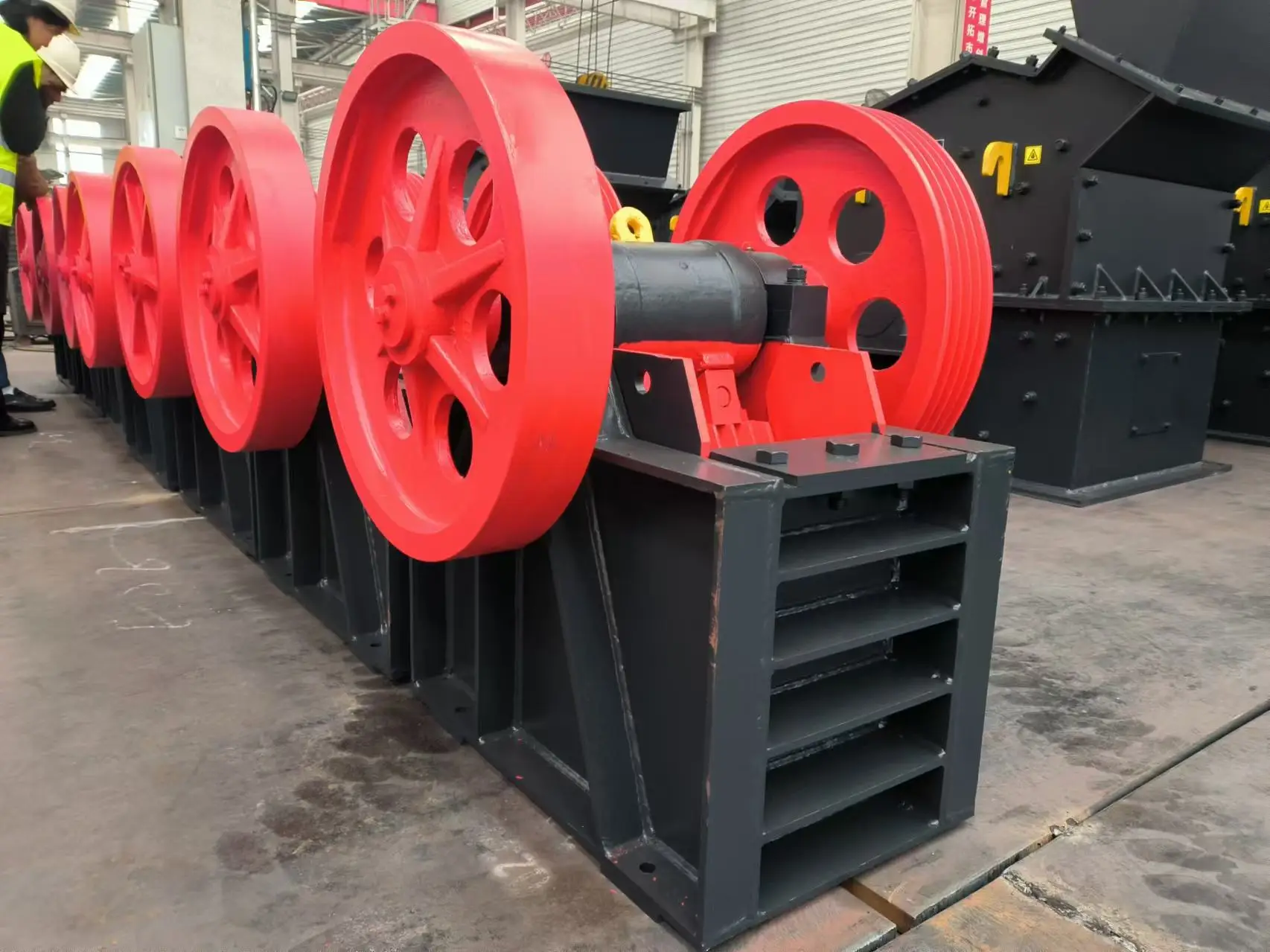
And a labeled structure diagram for better understanding:
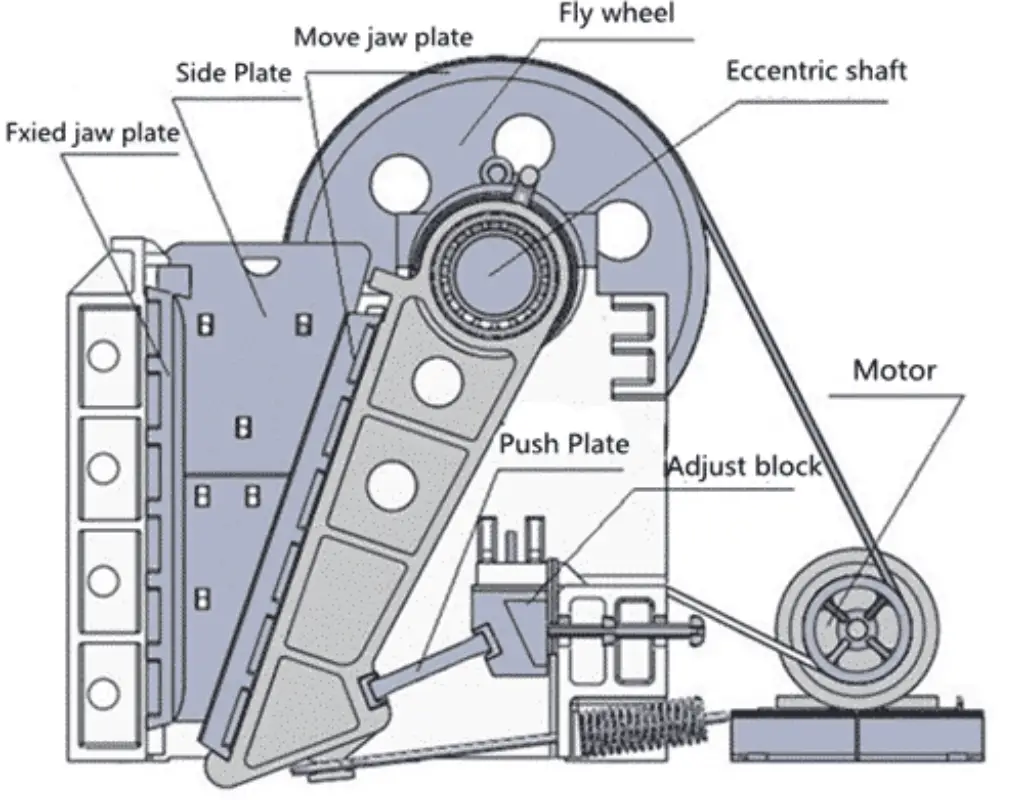
Part 2: Two Related Questions and Answers
Question 1: What is the typical production capacity of the PE1200×1500 jaw crusher? The capacity ranges from 400 to 1000 tons per hour (t/h), most commonly cited as 400-800 t/h. This varies based on factors like material hardness, feed size, moisture content, discharge setting, and operational conditions. For medium-hard materials like limestone with optimal settings, it often achieves 600-800 t/h.
Question 2: How much does a PE1200×1500 jaw crusher typically cost? Prices generally range from $100,000 to $200,000 USD (approximately 700,000 to 1.4 million RMB), depending on the manufacturer, configuration (fixed or mobile), accessories, and market conditions in 2026. Chinese manufacturers offer competitive pricing around the lower end, while premium brands or customized units may be higher. Exact quotes require contacting suppliers, as prices fluctuate with steel costs and demand.
Part 3: Benefits of Using the PE1200×1500 Jaw Crusher
Investing in this model offers several advantages:
- High throughput: Handles large volumes efficiently, ideal for high-production lines (e.g., 1000+ t/h aggregate plants).
- Durability and reliability: Robust frame and high-manganese steel jaw plates reduce wear and downtime.
- Cost-effective operation: Low energy consumption (15-30% savings in some designs) and simple maintenance lower long-term costs.
- Versatility: Processes a wide range of materials, serving as the primary crusher in quarries, mines, and recycling sites.
- Improved efficiency: Deep crushing chamber and optimal nip angle ensure better material flow and higher reduction ratios.
Here is an image of a large jaw crusher in operation at a mining site:

Part 4: Detailed Step-by-Step Guide on How to Operate It
Operating a PE1200×1500 jaw crusher safely and efficiently involves preparation, startup, monitoring, and shutdown. Always follow the manufacturer’s manual and safety protocols.
Step 1: Preparation and Inspection Check the crusher for damage, ensure jaw plates are secure, lubricate bearings, and verify no foreign objects in the chamber. Confirm feeder and conveyor alignment.
Illustration of key structural components:
Step 2: Adjust Discharge Setting Use the wedge or hydraulic system to set the closed-side setting (CSS) for desired output size (150-300 mm range).
Step 3: Start the Crusher Power on auxiliary equipment first (feeder, conveyors). Start the motor and let it reach full speed (no-load run for 5-10 minutes).
Step 4: Feeding Material Gradually feed material via vibrating feeder. Avoid overfeeding to prevent blockage.
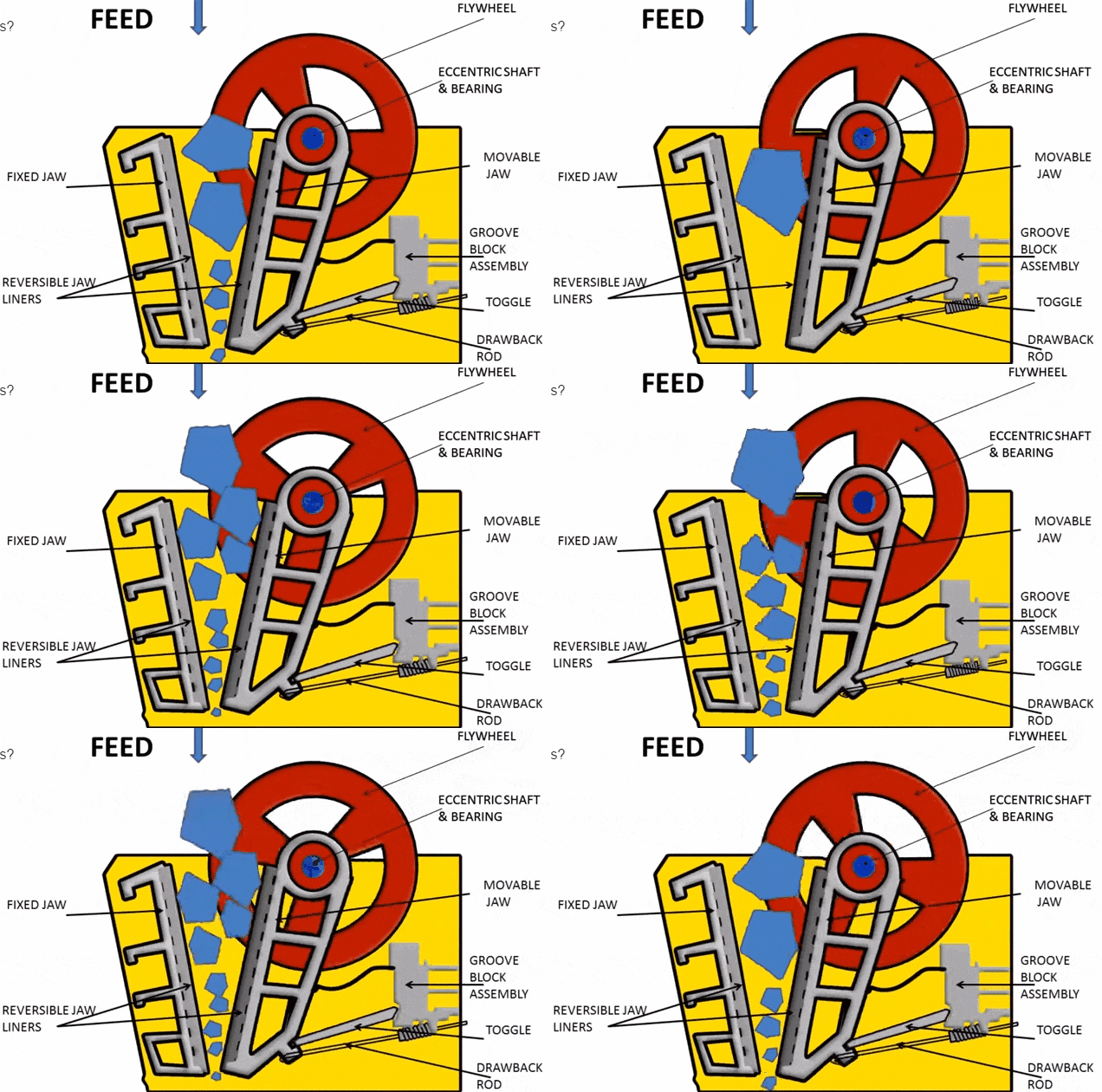
Step 5: Monitor Operation Watch for vibrations, noise, temperature, and amperage. Adjust feed rate for optimal performance.
Step 6: Shutdown Stop feeding, allow chamber to clear, then shut down motor and auxiliaries.
Part 5: 2-3 Practical Results
- Limestone Quarry in China: A 1000 t/h production line using PE1200×1500 as primary crusher achieved stable output of 700-900 t/h, reducing downstream equipment load and increasing overall plant efficiency by 20%.
- Granite Mining Site: Processed hard granite at 500-800 t/h with minimal jaw plate wear (replacement every 6-8 months), resulting in low operating costs and high profitability.
- Aggregate Plant Upgrade: Replacing a smaller crusher with PE1200×1500 boosted capacity from 400 t/h to over 800 t/h, enabling the site to meet higher demand and generate additional revenue.
These real-world applications demonstrate the model’s reliability for large-scale operations.


