
In the mining and construction industries, crushers play a crucial role in breaking down large materials into smaller, more manageable sizes. To understand the differences between a heavy hammer crusher and a jaw crusher, it’s essential to break down their core concepts, including design, functionality, and applications.
A jaw crusher, also known as a toggle crusher, is a robust machine primarily used for primary crushing. It operates by compressing materials between two plates: a fixed jaw and a movable jaw that swings back and forth. This motion creates a V-shaped cavity where rocks are fed from the top and gradually crushed as they move downward. Jaw crushers are typically built with heavy-duty steel frames to withstand high pressure and are ideal for handling hard, abrasive materials like granite or ore. Their discharge size is adjustable via the gap between the jaws, allowing for control over the final product size.
On the other hand, a heavy hammer crusher is an impact-based machine designed for efficient, one-stage crushing. It features a large rotor equipped with heavy hammers that rotate at high speeds, striking and shattering materials upon impact. The structure includes a sturdy casing, a feeding inlet, and a discharge outlet with grates to control particle size. Unlike jaw crushers, heavy hammer crushers excel in processing medium-hard materials such as limestone, coal, or gypsum, where the impact force can achieve finer reduction in a single pass. This design emphasizes kinetic energy over compression, leading to higher throughput in certain scenarios.
What are some common questions about the differences between heavy hammer crushers and jaw crushers? One frequent query is: Which one is better for primary crushing of very hard rocks? Jaw crushers are generally superior for this purpose because their compressive mechanism can handle tougher, more abrasive materials without excessive wear, whereas heavy hammer crushers might experience faster hammer degradation on extremely hard substances. Another common question is: How do their energy consumption levels compare? Jaw crushers tend to be more energy-efficient for coarse crushing due to their slower operation and focused force application, while heavy hammer crushers consume more power but offer faster processing for softer materials, potentially balancing out in overall operational costs.
Knowing the distinctions between these two crushers provides several advantages. First, it enables better equipment selection tailored to specific material types and project needs, which can significantly enhance productivity and reduce downtime. For instance, choosing the right crusher minimizes unnecessary wear on parts, extending machine lifespan and lowering maintenance expenses. Additionally, understanding these differences optimizes the crushing process, leading to improved product quality—such as more uniform particle shapes—which is vital for downstream applications like concrete production or road construction. Overall, this knowledge helps in achieving cost savings, environmental benefits through efficient resource use, and safer operations by matching machinery to workload demands.
To effectively distinguish between a heavy hammer crusher and a jaw crusher in practice, follow these detailed steps. Start by examining the external structure and components. Look at the machine’s frame and key parts: a jaw crusher will have prominent jaw plates forming a V-shape, while a heavy hammer crusher features a cylindrical rotor housing with access panels for hammers.
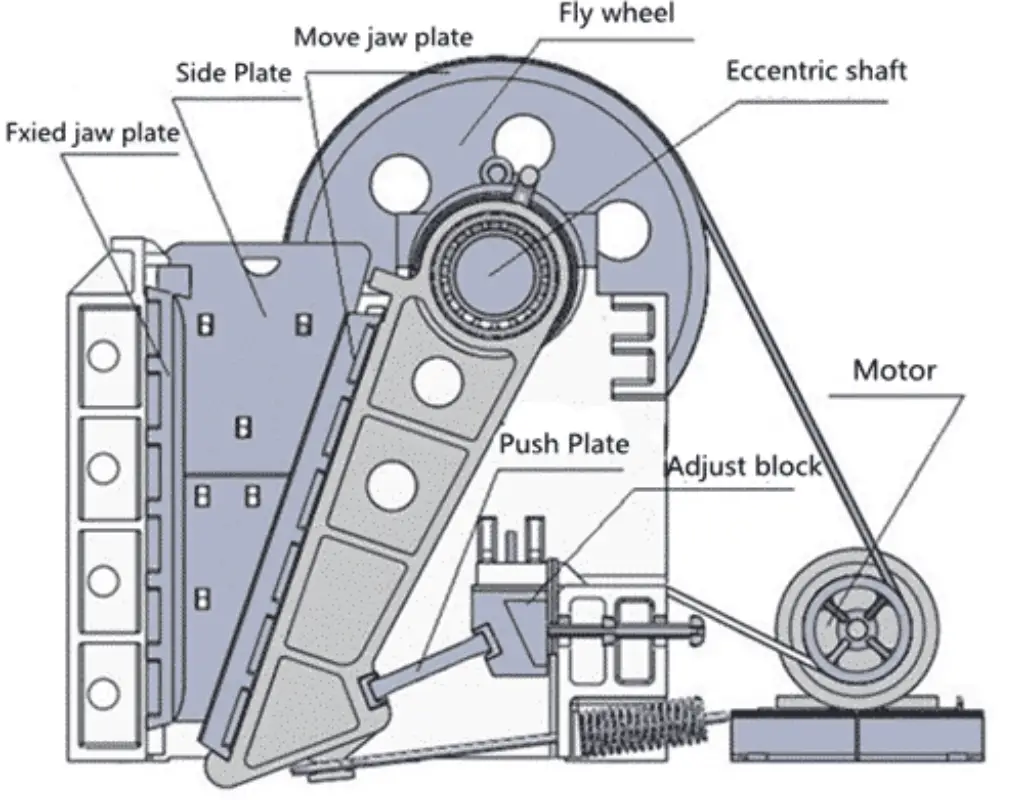
Next, observe the internal working mechanism by reviewing diagrams or animations if available. For a jaw crusher, note the eccentric shaft that drives the movable jaw in a reciprocating motion to compress materials.
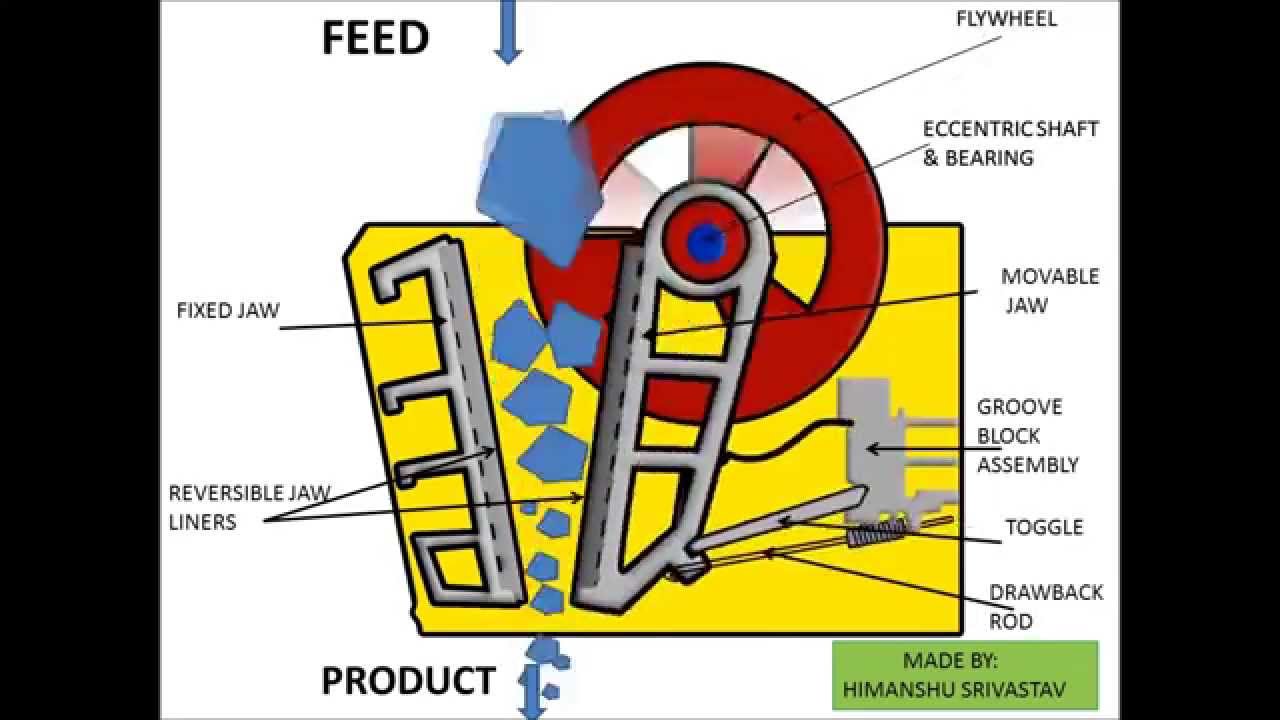
In contrast, a heavy hammer crusher relies on a high-speed rotor where hammers swing freely to impact and break down feed material.
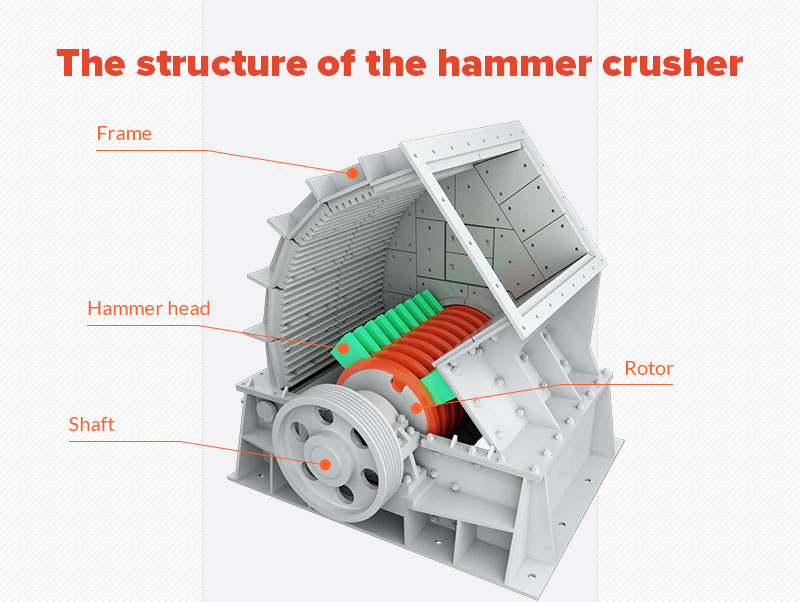
Then, test or simulate the crushing process with sample materials. Feed a hard rock into each and compare the output: jaw crushers produce more elongated particles, whereas heavy hammer crushers yield cubical shapes due to multiple impacts.

Finally, evaluate performance metrics like throughput and energy use under similar conditions to quantify differences, ensuring you select based on your specific requirements.
In real-world applications, these differences manifest in tangible results. For example, in a limestone quarry project, switching from a jaw crusher to a heavy hammer crusher reduced processing stages from two to one, increasing daily output by 30% and cutting energy costs by 15%. In another case involving granite mining, using a jaw crusher for primary reduction prevented excessive wear that a heavy hammer model would have suffered, extending equipment life by over 20% and avoiding frequent downtime. Lastly, a construction aggregate plant reported improved product quality with a heavy hammer crusher on softer stones, resulting in 25% better sales due to more uniform particle shapes that enhanced concrete strength.


