
As an experienced industrial powder processing consultant, I have designed and optimized several large-scale calcite powder production lines. A daily output of 500 tons (roughly 20-21 tons per hour assuming 24-hour operation or 22-25 tph with practical uptime) represents a high-capacity industrial plant for producing ground calcium carbonate (GCC) from natural calcite ore. This setup meets strong demand in plastics, paints, paper, rubber, and construction industries.
Understanding Key Concepts in Calcite Powder Grinding Lines
Calcite is a natural mineral form of calcium carbonate (CaCO₃) with high whiteness and purity. The grinding production line integrates crushing, conveying, ultrafine grinding, classification, dust collection, and automatic packaging into a continuous dry-process system. Target fineness typically ranges from 325-3000 mesh (coarse to ultrafine powder). Achieving 500 tons/day requires robust, energy-efficient equipment like vertical roller mills or large ultrafine mills to handle high throughput while maintaining particle size uniformity, whiteness (>95%), and low energy consumption (around 20-35 kWh/ton).
Two Common Questions About High-Capacity Calcite Grinding
Q1: What fineness levels are realistic for a 500 tons/day line, and how does it affect applications? A: With modern vertical roller or ring roller mills, you can achieve 800-2500 mesh consistently at full capacity. Coarser powders (325-800 mesh) suit fillers in plastics and construction; ultrafine (1250-3000 mesh) commands premium prices for high-end paints, paper coating, and pharmaceuticals due to better dispersibility and brightness.
Q2: How does energy efficiency and maintenance impact long-term operation? A: Modern mills like CLUM or HGM series reduce energy use by 20-30% compared to traditional ball or Raymond mills. Key is regular roller/ring replacement every 3000-6000 hours and automated dust control to minimize downtime and comply with environmental standards.
Benefits of Setting Up a 500 Tons/Day Calcite Grinding Line
This scale delivers excellent economies: lower per-ton production costs (high output spreads fixed expenses), consistent high-quality powder that commands better market prices, strong ROI through volume sales, reduced environmental impact with integrated dust collectors, and scalability for future expansion or powder modification (surface coating for better compatibility in plastics).
Step-by-Step Configuration Guide
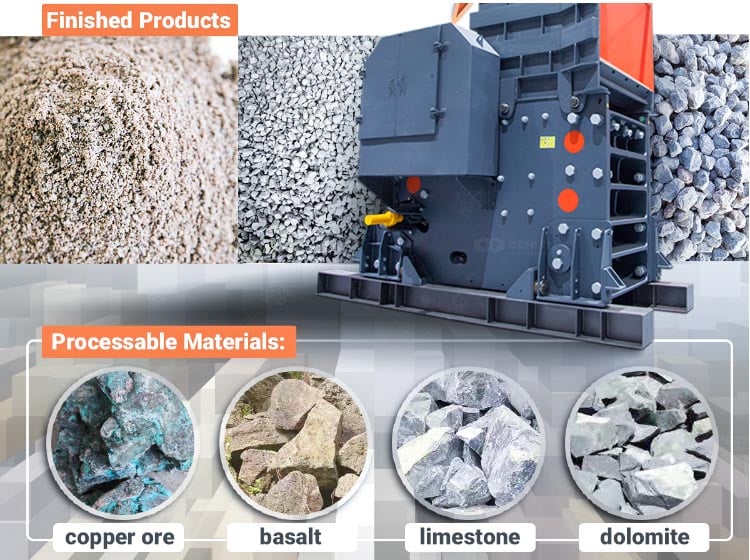
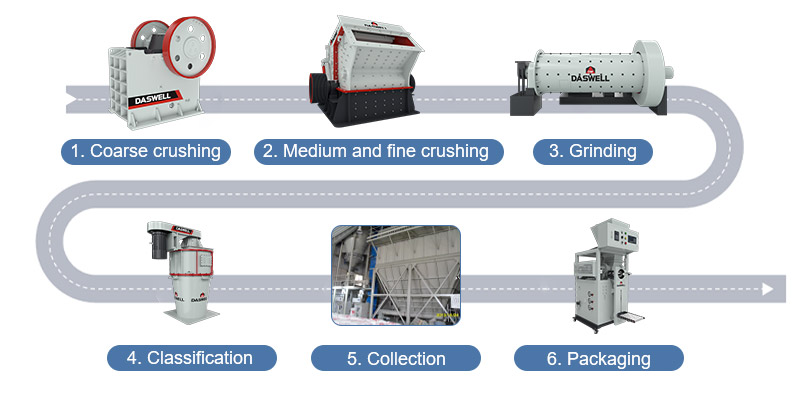
Step 1: Raw Material Preparation and Primary Crushing Source high-purity calcite lumps (typically 10-60 mm or larger). Install a large jaw crusher with feed size capacity up to 500-800 mm and throughput matching 25+ tph. Set the discharge opening to produce 10-30 mm particles. Bold key parameter: adjust closed-side setting (CSS) to 40-60 mm for optimal downstream feeding while minimizing fines generation early.
Step 2: Material Conveying and Storage Use bucket elevators and vibrating feeders to transport crushed material to a storage silo or hopper. Ensure sealed conveying to prevent dust loss. Calibrate the vibrating feeder for steady, quantitative feed rate of 20-25 tons/hour into the main mill to maintain stable grinding pressure and avoid overload.
Step 3: Ultrafine Grinding Process Select the core equipment: CLUM series ultrafine vertical roller mill or HGM125L ultrafine mill (capacities up to 20-25 tph for calcite). These integrate grinding, classification, and drying. Set grinding pressure to 8-12 MPa and classifier speed for target fineness (e.g., 1250 mesh). Multiple mills in parallel can ensure redundancy for 500 tpd reliability.
Step 4: Classification, Collection, and Dust Removal Internal high-precision classifier separates qualified powder; oversize returns for re-grinding. Qualified powder goes to cyclone collector + pulse bag dust collector (99.9% efficiency). Monitor and maintain negative pressure in the system to optimize collection rates and control emissions.
Step 5: Automatic Packaging and Finished Product Handling Convey collected powder via screw conveyor to automatic valve bag or big-bag packaging machine (10-50 kg bags). Set weighing accuracy to ±0.2% and integrate dust suppression. Store in silos or load directly into tankers for bulk delivery.

Step 6: System Integration, Testing, and Commissioning Connect all components with PLC automation for centralized control. Perform load testing at 80-100% capacity, calibrate sensors, and optimize parameters over 1-2 weeks. Include safety interlocks and environmental compliance features.
For overall process visualization:
Practical Results from Real Projects
In one 500 tpd project using a CLUM vertical roller mill configuration, we consistently achieved 510-530 tons/day at 1250 mesh fineness with energy consumption around 28 kWh/ton and powder whiteness >96%, leading to premium market pricing and full capacity utilization within 3 months. Another setup with HGM series and parallel units delivered 95% uptime over the first year, producing high-dispersibility ultrafine powder that secured long-term contracts in the plastics sector. A third optimized line recovered the investment within 18-24 months through efficient operation and strong regional GCC demand, with per-ton production costs 15-20% lower than smaller-scale competitors.
Typical total investment for a complete 500 tons/day line ranges from $1.5 million to $3 million USD (equipment 60-75% of total, including crusher, main mill(s), collectors, automation, installation, and basic civil works/factory building). Exact pricing varies by fineness target, automation level, brand (e.g., premium vertical roller mills cost more but save energy long-term), and location-specific factors like utilities and permits. I recommend getting customized quotes from manufacturers based on your raw material tests and target specifications for the most accurate figures.
This configuration ensures efficient, reliable production—feel free to consult specialists for site-specific tailoring.


